Prime Highlights :
- The Committee will regularly recommend steps to strengthen employability and workforce readiness.
- Members examined how AI is reshaping job roles and future skill demands.
Key Facts :
- NASSCOM, FICCI, and CII are apex industry bodies representing technology, trade, and commerce.
- India aims to secure ten per cent of the global services market by 2047.
Background :
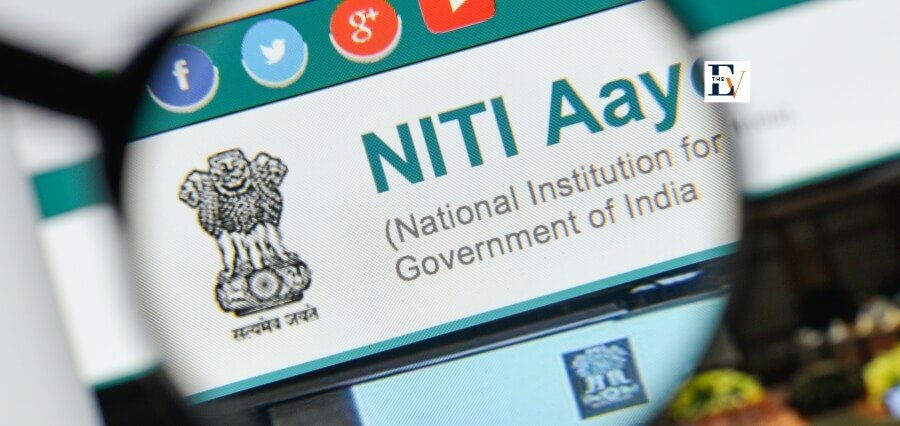
India has taken a significant step forward towards reducing the education-to-employment divide. The Government of India, through its think tank NITI Aayog, has set up a Standing Committee comprising eminent educators, scholars, and specialists to change India’s youth population into a productive workforce.
The Committee, headed by Nidhi Chibber (CEO, NITI Aayog), comprises senior officials from various ministries, state governments and industry associations like NASSCOM, FICCI and CII. The Panel proposes to bring education and skilling systems in India in tune with the changing economy and technology.
In its inaugural meeting, the members spoke on how India’s services sector can create quality employment and generate growth and exports. Some of the issues covered during their discussions included issues such as unemployment among youths, reduced labour participation, skill mismatch, and shifting away from agriculture-based employment to non-agricultural forms of employment. Some of the other issues deliberated by the group members included how artificial intelligence affected jobs in industries.
The move comes as Finance Minister Arun Jaitley announced in the current financial year’s Union Budget that India should strive to get a share of 10 per cent of the global services market by 2047.
Building industry-relevant skilling pipelines and strengthening government-employer partnerships for future skills is a national goal, according to HR experts and industry stakeholders.
The Committee will meet frequently to recommend measures that can be taken to increase the employability, entrepreneurship and overall capability of the labour force to handle the challenges of the future, to create a more agile and inclusive labour market for the next generation of India.