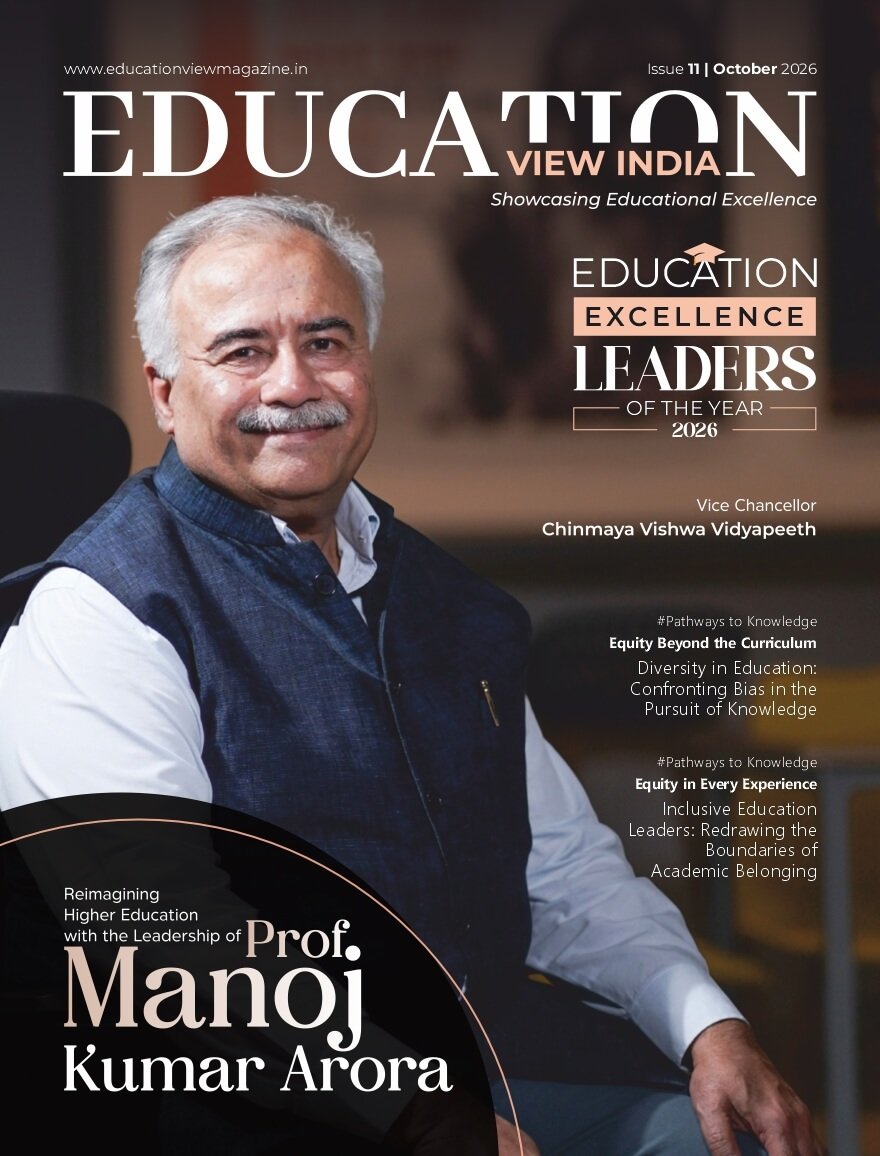
Higher education in India is entering its decisive decade. The National Education Policy has changed expectations about curriculum and teaching, while technology and automation have changed the skillset that graduates need to have. Stakeholders like parents, alumni, and industries are looking for universities that will churn out graduates who possess not only technical skills but also good judgment.
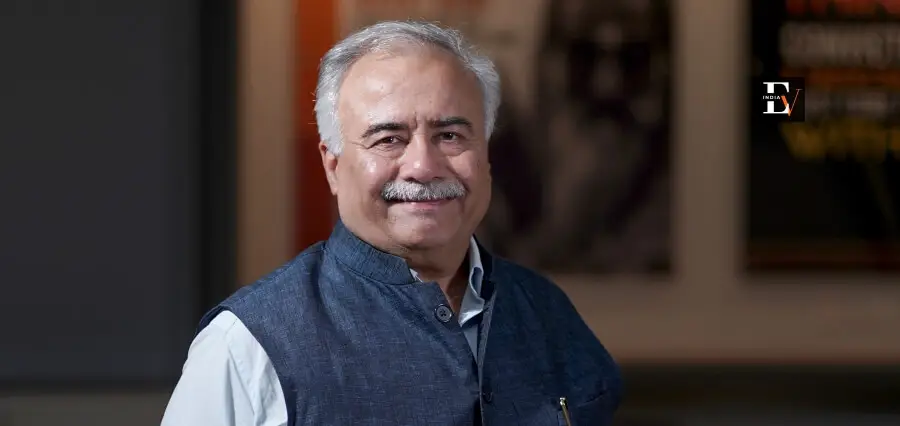
Professor Manoj Kumar Arora certainly has all these qualities. He is the Vice Chancellor of Chinmaya Vishwa Vidyapeeth (CVV), a private deemed-to-be university. He is a seasoned educationist who has had the experience of being a teacher, researcher, and institution builder. He has had the distinction of having been associated with an IIT, a public engineering college in its transformation period, and two young private universities. His career trajectory starting from a civil engineering classroom at Roorkee College to being the Vice Chancellor of Chinmaya Vishwa Vidyapeeth is almost four decades old.
The Classroom That Started It All
Prof Arora’s leadership story begins in 1988, when he joined the Department of Civil Engineering at the University of Roorkee, now IIT Roorkee, as a young faculty member. He did not recognise it then, but that classroom shaped the next thirty-eight years of his life. Teaching humbles a person, he says, because every new batch of students asks the teacher to relearn how to explain what he thought he already understood.
He earned his doctorate in Remote Sensing at Swansea University in the United Kingdom, then worked on a NASA-sponsored postdoctoral project at Syracuse University in the United States, focused on algorithms for land cover and its change. The years abroad taught him a lasting lesson. “Excellence in research and warmth in mentorship are not opposites; they reinforce each other,” he says. He returned to Roorkee with that conviction intact and excelled in teaching, research and administrative roles alike, a balance that cemented his leadership qualities.
Building Institutions, One Lesson at a Time
At fifty, Prof Arora stepped into institutional leadership. He moved to his alma mater as Director of Punjab Engineering College (PEC) Deemed to be University, then served as Vice Chancellor of BML Munjal University and SRM University-AP before joining CVV. Each posting taught him something distinct. Roorkee gave him rigour. PEC taught him how to retransform a ninety-year-old public institution. BML Munjal and SRM University-AP, both young and ambitious state private universities, showed him how to build a university culture from scratch.
He could have stayed within one well-established institution for his entire career. Instead, he chose an old public institution, then young private universities finding their footing, and finally an institution attempting something genuinely different in Indian higher education. Every move offered less security than staying put, and everyone taught him more.
Leading Through Course Corrections
The hardest chapters of his career, Manoj reflects, came when progress had to pause and a plan the team felt proud of needed revisiting because reality had shifted underneath it. Stopping to admit that something is not working and returning to the drawing board, demands humility. Those moments taught him to define resilience not as refusing to change course, but as changing it quickly and bringing the team along.
That philosophy runs through four principles he applies daily. First, vision must move in both directions. It cannot stay locked inside a vice chancellor’s office; it must travel from the Governing Body or Board through deans and heads of department into classrooms and laboratories and return as feedback. Second, he reviews plans honestly whenever results deviate from intent, rather than defending a plan simply because leadership announced it. Third, he respects every stakeholder’s context: a first-year student, a senior professor and an administrative staff member carry different pressures and hopes, and he listens differently to each while treating all with equal importance. Fourth, he treats parents and alumni as key stakeholders and gathers their feedback at regular intervals.
Presence Over Paperwork
At CVV, Prof Arora works on every front: governance and finances, infrastructure planning, academic programmes, research culture, collaborations and the entrepreneurial ecosystem. All of it serves academic excellence and student transformation. He builds a team of enthusiastic leaders and favours decentralisation, delegation of powers, academic and administrative freedom, and a performance-based culture with accountability.
His most personal commitment is presence. He makes a point of appearing on campus, in classrooms and at student events. “A vice chancellor known only through circulars is not truly leading,” he says.
A Vision Rooted in Gurudev’s Ideal
The academic architecture at CVV reflects the founding vision of Pujya Gurudev Swami Chinmayananda: education that empowers the mind, ennobles the heart and inspires purposeful action. Revamped curricula, interdisciplinary electives and industry-aligned research tracks carry that vision forward, while experiential pedagogy follows five stages: Aditi (introduction), Bodh (understanding), Abhyas (practice), Prayog (application) and Prasar (expansion). Prof Arora measures growth not by numbers alone, but by whether a student who walks in today leaves with clarity of thinking and balance in living.
AI and the Whole Human Being
Prof Arora approaches technology as a practitioner, not a spectator. He has spent decades working at the intersection of remote sensing, geospatial technology and, increasingly, artificial intelligence and machine learning, and he has watched these tools mature from inside a research lab. At the Association of Indian Universities’ National Conference of Vice Chancellors, he argued that education reforms have altered the course of history before, and that the NEP now arrives just as AI and automation reach their peak.
His concern shapes how CVV thinks about curriculum and pedagogy. Human intelligence remains unrivalled, he argues, yet the same innovations can quietly make people dependent on technology instead of masters of it. That is why he champions an education that nurtures intellectual wellbeing alongside emotional, ethical, spiritual and physical wellbeing. Staying ahead, in his view, does not mean adopting every new tool. “It is about constantly asking whether a tool is serving the whole human being in front of us or only a fraction of them,” he says.
Measures of a Career
The Indian Society of Remote Sensing conferred the Bhaskar Award on him in 2023, its highest recognition in Geospatial Technology, and he values it because his research questions, from land cover mapping to hazard and risk studies, mattered to the wider scientific community. The DST Young Scientist Award, the AICTE Young Teacher Career Award, a Commonwealth Scholarship and a NASA fellowship also mark his research standing.
Still, the Outstanding Teacher Awards he won at IIT Roorkee in 2006 and 2010 sit closer to his heart. A research award tells a scientist his ideas hold up, he reasons, while a teaching award tells him students felt something in the way he showed up for them. He has guided twenty-six PhD theses and fifty-six master’s dissertations, and he counts the number of people whose academic paths he has shared as his proudest achievement.
The Balance Behind the Leader
A vice chancellor’s calendar leaves little room for balance, Prof Arora admits, so he builds balance into how he leads rather than around it. Research anchors him: even in full-time leadership roles, he has continued to publish, guide scholars and stay connected to geospatial technology and AI research, a quieter counterweight to meetings and administration. He leaves work with zero pendency, reminds himself that presence with family matters as much as presence in a boardroom, and calls the resulting time at home a joy that keeps him pushing.
Qualities and Advice
Patience paired with urgency tops his list of qualities for education leaders. Meaningful academic culture takes years to build and cannot be rushed, yet students get only one chance at their education and cannot wait for an institution to get its act together. He also prizes an eye for detail tempered by intellectual humility and insists that a mission statement means little until everyone from the vice chancellor to the student mentor grasps what it means for thousands of students and their parents.
For aspiring leaders, his counsel begins with a simple rejection of waiting. “Do not wait for a title to start practising leadership,” he says. The habits that serve him best today, observing and listening before deciding, reviewing plans honestly, and staying close to research and students, took root when he was a young faculty member at IIT Roorkee, long before any administrative post came his way.
The Work Still to Be Done
In CVV, the objective of Prof. Arora seems very simple and ambitious. He dreams of creating an institution where the ancient wisdom of India and modern academic disciplines co-exist and complement each other. In doing so, the emphasis will be on interdisciplinary research and innovations, and the ecosystem for entrepreneurship, as envisioned by Gurudev.
Beyond the campus, he continues to engage in understanding the response of Indian higher education to AI, transformation of teachers, automation, and NEP changes through the AICTE, the Association of Indian Universities, accreditation bodies like the NBA, and interactions with the IITs, NITs, DRDO, ISRO, and CSIR labs.
The classroom in Roorkee, the revived college, the new universities, and the research lab come together in CVV, where the work is seen more like an objective that he was preparing himself for all his life.