Equity Beyond the Curriculum
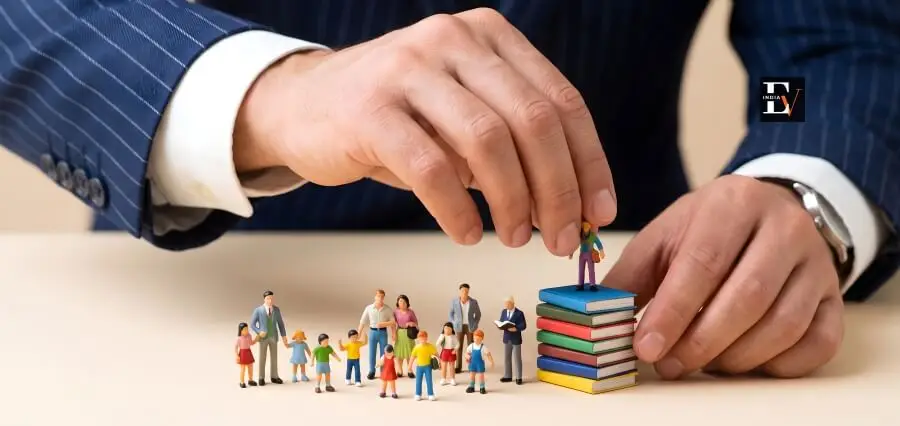
Each classroom has a story to tell about which students belong. Students enter with a variety of languages, religions, physical disabilities, income levels, and cultural legacies, and how educational institutions handle these differences impacts what students learn about themselves and others. Educational diversity is not a mere idealistic catchphrase but a real-life demonstration of whether educational institutions live up to their ideals.
The reality is that bias still impacts many of these experiences. Educators may unknowingly have lower expectations for particular students. Textbooks may ignore entire populations. School discipline codes may target certain populations more severely than others for similar actions. Scientists have noted these trends for decades, and educators are under increasing pressure to confront and correct them.
Where Bias Hides
It rarely comes out with an announcement. It is seen in who is being called upon, who is given advance classes, and which history is taught in school. The students of underrepresented groups tend to recognize these messages very early. When they see that there are not many teachers who resemble them, when they hear not many stories of people who are similar to their families, they might think that all the knowledge is of somebody else. This could make them miss school and reduce their ambitions.
Access to knowledge becomes a problem as well. Children coming from wealthier families live close to better-equipped schools, pay for their tutoring, and know how to get admitted into such institutions. It is also common practice that children with special needs and those who are learning a second language have to wait for the services offered by schools to become available.
A Landmark Ruling
This is illustrated by an event in the history of America. On May 17, 1954, the Supreme Court of America made a unanimous judgment in the case of Brown versus Board of Education, where it was argued that racial segregation in American schools went against the American constitution. The judgment was authored by Chief Justice, Earl Warren. The verdict struck down the separate but equal principle of public schooling.
Strategies That Work
Several methods are recommended based on research and real-world experience. Diverse schools are able to create positive role models by hiring diverse teachers and also introduce multiple perspectives during the planning process. Diversity in curricula benefits all students, not just the ones who can identify with the content. Teachers who have undergone sensitivity training are less likely to stereotype and therefore can respond to students more objectively.
Inclusive teaching also has an impact on classroom instruction. Teachers craft assignments and lesson plans that allow for varied forms of assessment and learning. Material is presented in multiple ways, and challenging questions encourage critical thinking rather than stereotypes. Boundaries of behavior are established and strictly enforced. Students are thus taught the important lesson of engaging in debate without writing off the other person, a valuable lesson well beyond the classroom.
Leadership also needs to view data as a resource. Schools which use statistics on enrollment, disciplinary actions, and performance of various groups are able to catch potential problems early enough to intervene. This is not something done in private – families have the right to know the facts and communities have a right to respond. The way forward on diversity in education starts with honest measurement and publication.
A Debate Without Easy Answers
The discussion goes on. The critics say that the programs emphasize identity over merit, but the supporters reply that talent is ubiquitous and opportunity is not. The parents clash over the curriculum, while the politicians disagree over how to approach race, gender, and history in schools. The journalists, the teachers, and the parents will keep debating these issues, and it is good as long as it is an honest debate.
Looking Ahead
Issues of technology have risen in the context of diversity in education. Technology can help bring learning to rural children and children with learning problems. However, algorithms may also perpetuate bias if they learn on an unbalanced dataset. Schools that incorporate technology should assess it for equity and hear the voices of the students who use it.
Policy can make a difference. Government can ensure the equal funding of schools, develop pipeline programs for teachers, and safeguard students from discrimination. Universities can provide opportunities through mentorship and outreach programs. Employers can collaborate with schools to ensure a path for every graduate.
Diversity in education will not do away with discrimination in one generation. Nevertheless, schools that address discrimination directly are preparing their students for a diverse world. Diversity in education benefits every student, since knowledge is generated by many voices.