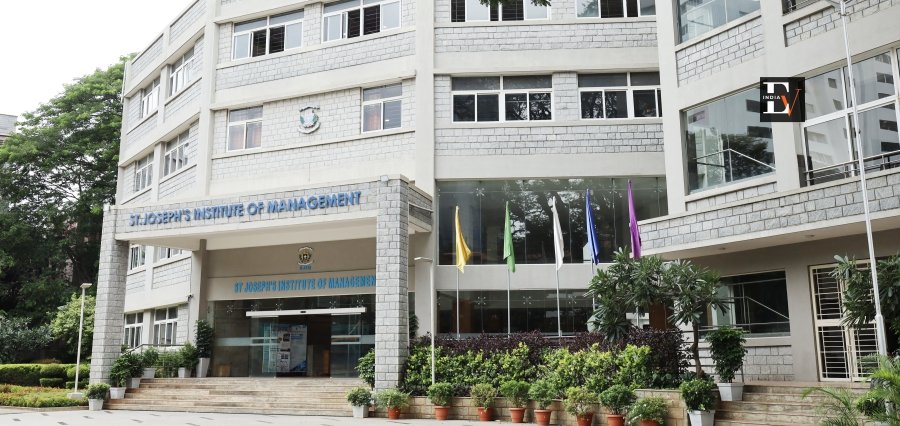
Nestled away from the hustle of MG Road on Primrose Road in Bengaluru is a management school that, over the course of five decades, has shown through quiet diligence that business education does not have to sacrifice its dreams for its morals. The St. Joseph’s Institute of Management (SJIM), established in 1968, is one of the oldest management institutes in Karnataka and has seen firsthand the development of management education in India. The SJIM has been offering AICTE-accredited Post Graduate Diploma in Management (PGDM) courses since 1996.
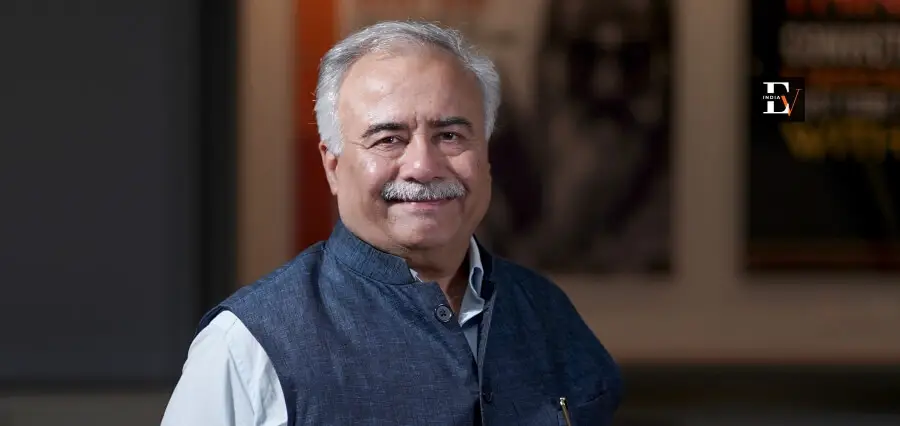
Rev. Dr. Roshan David Pereira SJ, the Director and Professor of SJIM, helms an institute whose tradition is viewed as a basis of constant reinvention rather than a monument to rely on. Throughout the span of half a century of existence, SJIM managed to diversify its student population, improve its faculty, build modern infrastructure, and constantly increase the quality of education through evolution.
This process is crucial now in 2026 more than ever before. The Indian market of management education is currently experiencing fast growth and a growing number of choices of prospective students, who have to choose from numerous colleges promising placements, rankings, and even campus tours. Under such circumstances, SJIM tries to present itself differently by inviting students to consider its legacy, values, and professionalism along with other factors. This is what makes the image of SJIM so appealing to those students, who are willing to receive an MBA degree that will make not only their CVs look better but also form them as professionals.
A Vision Rooted in More Than Commerce
The institution identity of SJIM is deeply rooted in the worldwide Jesuit education system, which has existed for over 500 years of educational legacy. This legacy influences every aspect of SJIM. The core vision of this institution includes professional competence as well as social responsibility so that the students become useful for the development of society and business, without harming either.
“Our founding vision was never only about producing capable managers,” said Rev. Dr. Roshan David Pereira SJ, Director & Professor, SJIM. “It was about preparing individuals who could contribute meaningfully to business and to society at the same time.”
This dual mandate is encapsulated by the Jesuit doctrine of Magis, which emphasizes the need for perpetual excellence. Magis is not content with complacency. It challenges both the student body and the faculty to rise above traditional indicators of success in favor of the ongoing development of the institution itself, innovative teaching methods, and personal growth. In addition to Magis, there exists another principle that is equally important: that of competence and conscience, a philosophy of producing managers who generate tangible business value yet are socially responsible.
Curriculum That Moves with the Market
SJIM treats curriculum design as an active, ongoing discipline rather than a fixed document revisited once a decade. The institute mandates continuous, proactive revision of its management curriculum to keep pace with shifting organizational demands, technological disruption, and global business trends. That philosophy shows most clearly in the institute’s embrace of Business Analytics as a core specialization, alongside an expanding suite of certification programs in artificial intelligence and advanced analytics.
Global exposure is built into the learning architecture rather than bolted on. SJIM runs an open scholarship initiative that reimburses students who successfully complete selected online EdX programs from leading global universities. The institute also hosts the SJIM-Albers International Business Plan Competition, a platform that has run for nearly a decade and connects student teams across countries to solve real global business challenges through virtual, cross-cultural collaboration.
“We deliberately built our global partnerships so that a student in Bengaluru can collaborate, compete, and learn alongside peers anywhere in the world,” Rev. Dr. Roshan David Pereira SJ noted. “That exposure is not a bonus; it is central to how we define readiness for today’s economy.”
What Sets SJIM Apart
Several factors distinguish SJIM within India’s crowded management education landscape. Its campus location, at the heart of Bengaluru’s central business district near MG Road, gives students daily proximity to one of India’s most vibrant corporate ecosystems, a geographical advantage that translates into constant, organic exposure to industry.
The institute’s faculty roster draws heavily from India’s premier academic institutions, including IIMs, IISc, and NITs, giving the classroom experience a depth that matches its ambition. SJIM also runs the Rural Immersion for Sensitivity and Empowerment (RISE) initiative, an internationally recognized program that exposes students to rural socio-economic realities and demonstrates how management principles can drive inclusive development, a rare offering among business schools focused primarily on corporate placement metrics.
The institute’s alumni network, cultivated over more than five decades, reinforces this differentiation. Distinguished graduates such as Padma Bhushan awardee and former Tata Steel Vice Chairman B. Muthuraman continue to return to campus to mentor students and support recruitment, a tangible sign of the confidence employers place in SJIM’s graduates. This intergenerational link between alumni and current students is not incidental; it is woven into how the institute sustains its reputation, feeding fresh mentorship, recruitment access, and real-world perspective back into the classroom year after year.
“When leaders of B. Muthuraman’s stature choose to come back and invest their time in our students, it validates everything we set out to build,” said Rev. Dr. Roshan David Pereira SJ. “Our alumni are not just a legacy; they are active participants in shaping the institute’s future.”
Learning by Doing, Engaging by Design
SJIM treats experiential learning and industry engagement as central pillars of its academic model rather than supplementary activities. The institute has moved decisively away from rote instruction, integrating management theory with real-world practice through mandatory industry visits, live interactions with corporate practitioners, and regular guest lectures. Placement preparation is embedded directly into the student journey, ensuring that classroom concepts are immediately reinforced by practical corporate context.
To keep this engagement current, SJIM maintains active partnerships with premier professional bodies, including the National Institute of Personnel Management (NIPM), the National HRD Network (NHRD), and the Indian Institute of Materials Management (IIMM). These alliances keep students connected to evolving industry practices and emerging business trends throughout their academic tenure and expose them to senior executives through corporate-driven certificate programs.
Confronting Real Challenges Head-On
SJIM’s leadership is candid about the practical challenges the institute navigates. A significant share of incoming students arrives without prior professional work experience, which can present a steep learning curve in a management environment. SJIM addresses this through a structured onboarding and training system that pairs intensive industry exposure with individualized placement assistance, systematically building the professional confidence, communication ability, and technical competence that corporate roles demand.
The rapid rise of digital technologies, data analytics, and artificial intelligence represents a second major challenge- one reshaping the global corporate landscape at a pace few institutions can match. SJIM has responded by investing heavily in cutting-edge infrastructure and implementing AI-supported pedagogical tools and digitally enabled learning methodologies, enriching classroom delivery and strengthening faculty effectiveness in the process.
Recognition That Reflects Rigor
SJIM’s institutional credentials reflect decades of compliance and quality. Its PGDM programs have maintained continuous, unbroken AICTE approval since 1996. In December 2022, SJIM was formally welcomed as an educational member of AACSB International (the Association to Advance Collegiate Schools of Business), and it has sustained that membership for more than three consecutive years, leveraging the alliance to enhance its academic frameworks. The institute has also begun the rigorous, multi-step process toward full AACSB Accreditation, a commitment that underscores its intent to align curriculum, faculty qualifications, and institutional goals with the highest international benchmarks in business education.
“Pursuing AACSB Accreditation is not about chasing a label,” Rev. Dr. Roshan David Pereira SJ explained. “It is about holding ourselves to a global standard and ensuring our students graduate ready to compete anywhere in the world.”
Beyond accreditation, SJIM’s signature programs have earned international recognition in their own right. The RISE initiative has been formally recognized for its innovative educational approach at the Scholas Occurrentes Pontifical Foundation meetings, while the SJIM-Albers International Business Plan Competition has been officially recognized as one of the best educational practices by the International Association of Jesuit Universities (IAJU).
Faculty and Research as the Engine of Quality
SJIM places significant strategic emphasis on continuous faculty development and scholarly research, treating educator quality as inseparable from institutional excellence. Faculty members drawn from the IIMs, IISc, and NITs are actively encouraged to pursue pedagogical innovation, supported by investment in AI-enabled teaching tools and digitally enabled learning methodologies that let instructors customize teaching styles, simulate corporate scenarios, and foster active, participatory learning.
This academic rigor is deliberately bridged to the corporate world through the institute’s multi-tiered industry collaborations. Partnerships with NIPM, NHRD, and IIMM bring a steady flow of real-world knowledge onto campus through corporate visits, certificate programs, and executive-led guest lectures an ecosystem engagement that keeps the daily curriculum hyper-relevant.
Advice for the Next Generation of Managers
Rev. Dr. Roshan David Pereira SJ offers aspiring management students a clear message: look beyond placement statistics. Career outcomes matter, he acknowledges, but long-term professional resilience depends on choosing an institution committed to holistic growth — one built on strong values, ethical leadership, and a proven legacy of nurturing lasting corporate competence.
“Aim at shaping your career rather than simply seeking a job at the end of your journey,” he advised prospective students. “An educational foundation should build character and managerial conscience, not just technical skill.”
He also urges students to prioritize practical and digital skills, actively seeking exposure to data-driven decision-making, artificial intelligence, and business analytics while embracing social awareness. Today’s corporate leaders, he notes, are judged not only on financial performance but on their consciousness of environmental and societal responsibility. Experiential learning, including rural immersion programs, remains central to developing that awareness.
Way to a Digital-First Future
The future aspirations of SJIM flow organically out of its rich past. The institute seeks to be a leader in future-oriented institutional development by adopting state-of-the-art AI-based learning mechanisms, flexible technology-enabled platforms, and internationally benchmarked educational standards, thus merging technological infrastructure and innovation in pedagogy to enhance the educational experience of its students and stay ahead of market disruptions.
Having already achieved 50 years of excellence, SJIM seeks to actively define the future of management education in India by becoming the driver of national development through the consistent production of ethical, globally competent, and socially responsible leaders who embody both Jesuit principles and technological innovation at their best, and thus, to set a new national standard for training managers for the realities of the future economy.
To an institution which has been developing its answer to one question for almost six decades now – how to develop competence without compromising conscience SJIM being among the leading MBA colleges in India for study in 2026 is not merely a result of a single achievement, but rather a testimony to its living legacy.