Prime Highlights
- ICMR, NMC invite medical education research proposals.
- Grants support digital innovation and projects up to four years.
Key Facts
- ICMR leads India’s biomedical research.
- Eligible medical institutions can apply through qualified regular faculty members.
Background
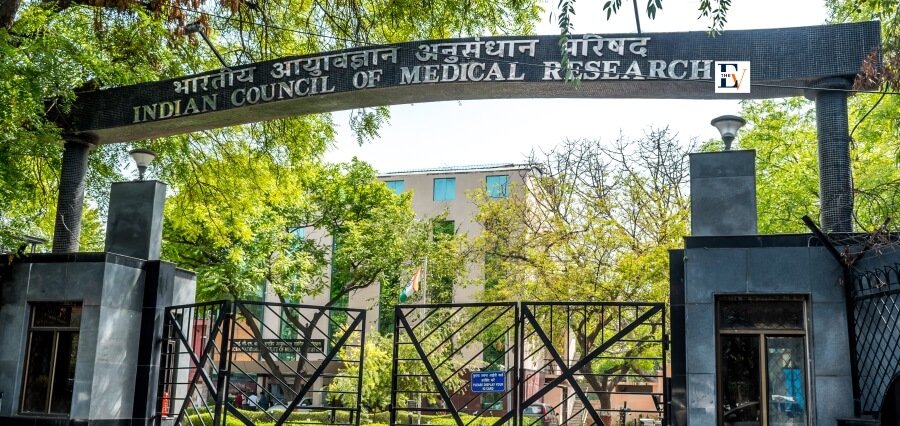
The Council of Medical Research (ICMR) and the National Medical Commission (NMC) have invited proposals for research from qualified medical colleges and institutions to improve the quality of medical education in India. The programme will promote research projects that address digital innovation, skills, and evidence-based teaching to enhance undergraduate, postgraduate, and doctoral medical education.
The purpose of the grant is to support the creation and piloting of innovative pedagogical techniques to enhance student learning, faculty development and technology-based education. Another objective is to identify realistic solutions that could help improve the system of medical education and provide proper training to the recruits in the health sector.
The suggested topics for research could include digital learning platforms, simulation training, artificial intelligence in medicine, competency-based learning, curriculum development, and assessment methods, among others. The programme also provides support for projects focused on enhancing the quality of education and student engagement.
There will be two types of funding. The Anveshan small grant will fund projects for three years, and the Nishayak Anveshan intermediate grant will fund projects for four years. Applicants are also welcome to add another 6-month prep phase to their application, for project planning, ethics approval and pilot testing, etc., as long as they wish without requesting additional funding.
Eligible medical college, university, and teaching institutions’ regular faculty members may apply as Principal Investigator. They need to have an interest or experience in medical education research and should have a background in MBBS, MD, MS or DM.
Applications will be judged based on scientific merit, creativity, practicality, potential educational value, and institutional capability. The objective of this program is to promote more effective forms of teaching, resilient systems of digital education, as well as evidence-based reforms that would improve health care education in the country.