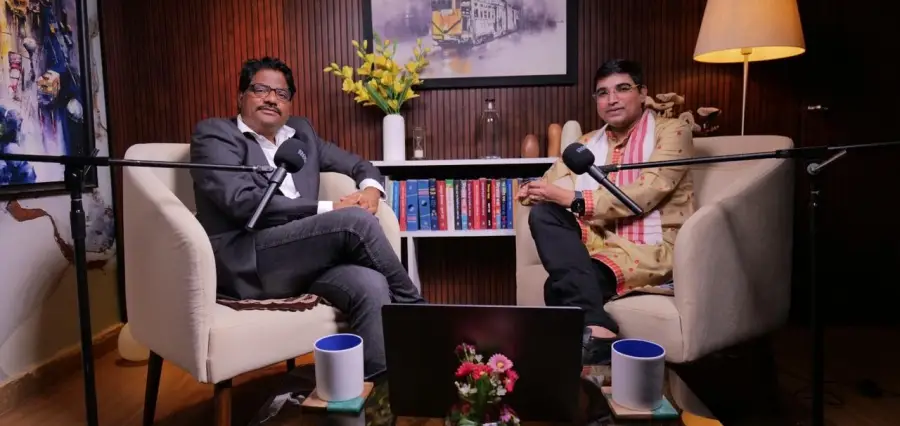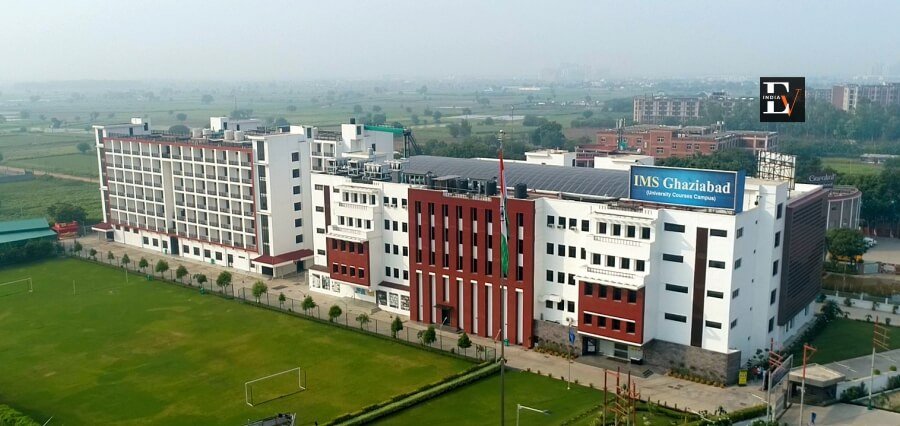
The true measure of an educational institution has never been the size of its campus or the length of its programme catalogue. In today’s competitive academic environment, institutions are expected to go beyond traditional classroom teaching and build a learning culture that prepares students for both professional excellence and responsible citizenship. The role of higher education has expanded towards nurturing adaptable, skilled and value-driven individuals.
IMS Ghaziabad (University Courses Campus) has spent more than three decades building exactly that kind of credibility. Over the years, it has grown from a focused management institution into a multidisciplinary centre of learning. The institution treats academic rigour, student development and real-world preparation as equally important priorities. With a strong focus on preparing students for the future, the institution continues to strengthen its presence.
Can you share the story behind the inception of your institute and its core mission?
IMS Ghaziabad (University Courses Campus) was established with a vision to create an institution that combines academic excellence with holistic student development. The founders recognized the need for an educational ecosystem that bridges classroom learning with real industry expectations while nurturing ethics, leadership, innovation, confidence, and social responsibility among students.
From its inception, the institution focused on creating a learner-centric environment where academics are supported by practical exposure, experiential learning, mentorship, and technological advancement. The core mission of the institution is to prepare students not only for successful careers but also for meaningful contributions to society. Over the years, IMS Ghaziabad (University Courses Campus) has evolved into a multidisciplinary institution known for quality education, industry-oriented learning, global exposure, and strong student support systems.
The institution strongly believes that modern education should develop future-ready professionals who are adaptable, ethical, innovative, and capable of thriving in a rapidly changing global environment.
What are some pivotal milestones that have shaped your institute’s journey so far? (international exposure)
The journey of IMS Ghaziabad (University Courses Campus) has been marked by several milestones that reflect its commitment to academic excellence and innovation. Established in 1990, the institution steadily expanded its academic offerings to meet evolving industry and societal requirements.
The institute became one of the early institutions to introduce the BBA programme in 1994, followed by the BCA programme in 2000, strengthening its contribution to management and technology education. Over the years, the institution expanded into Journalism & Mass Communication, Biosciences, and other professional disciplines.
A major milestone was the institution receiving NAAC Grade ‘A’ accreditation, validating its standards in academics, governance, infrastructure, research, and student support. Recognition under Section 12(B) by UGC further strengthened the institution’s academic credibility.
IMS Ghaziabad (University Courses Campus) has also received recognition through reputed rankings such as Times B School Survey, IIRF, and GHRDC across Management, IT, Journalism & Mass Communication, and Biosciences. These recognitions reflect the institution’s strong placement support, academic quality, and industry engagement.
How would you define your leadership approach in driving academic and institutional growth?
Our leadership approach is based on collaboration, inclusivity, innovation, and continuous improvement. We strongly believe that academic and institutional growth can only be achieved when students, faculty members, administrators, and industry partners collectively contribute towards a shared vision.
At IMS Ghaziabad (University Courses Campus), the focus remains on strengthening academic excellence through innovative teaching methodologies, research orientation, interdisciplinary learning, and industry integration. The institution continuously upgrades its curriculum and academic practices to align with changing professional and technological requirements.
We also place significant emphasis on ethical values, accountability, transparency, and social responsibility. Our leadership philosophy focuses not only on producing skilled professionals but also on nurturing responsible citizens and future leaders who can contribute positively to organisations and society.
In what ways does your institute stay ahead in terms of academic innovation and relevance?
IMS Ghaziabad (University Courses Campus) continuously adapts to changing academic and industry trends by integrating innovation, technology, research, and practical learning into its academic ecosystem.
The institution regularly updates programmes across Management, Computer Applications, Journalism & Mass Communication, and Biosciences to align with industry expectations. Emerging areas such as Artificial Intelligence, Data Analytics, Digital Marketing, Sustainability, HR Analytics, FinTech, and Digital Media are integrated into learning practices to prepare students for future careers.
The institute has also strengthened its Outcome-Based Education (OBE) framework by continuously revamping the curriculum to ensure measurable learning outcomes, industry relevance, skill enhancement, and academic flexibility. A strong Internal Assessment Component further supports continuous evaluation, practical application, classroom participation, presentations, assignments, and project-based learning, enabling students to engage more actively in the learning process.
One of the institution’s major strengths is its use of experiential learning methodologies including case studies, business simulations, live projects, industry assignments, presentations, and research-based learning. These practices help students develop analytical thinking, creativity, communication, and problem-solving abilities.
Technology and innovation are deeply embedded across departments and laboratories, ensuring students gain hands-on exposure to modern tools, software, and AI-enabled learning systems. The institution actively promotes an AI-driven tech-oriented learning environment that prepares students to adapt to the rapidly evolving global technological landscape.
The institution also organises International Faculty Development Programmes (FDPs), seminars, workshops, conferences, and collaborative learning initiatives to ensure that faculty members remain updated with technological advancements, classroom management techniques, innovative pedagogies, and global academic standards.
Technology-enabled learning through smart classrooms, ERP systems, blended learning platforms, and digital tools further strengthens the academic ecosystem and improves accessibility for students.
How do you ensure a balanced focus on academic excellence, holistic development, and real-world exposure?
IMS Ghaziabad (University Courses Campus) follows a student-centric approach that integrates academics, personality development, leadership building, and industry exposure into one comprehensive learning ecosystem.
Academic excellence is promoted through outcome-based learning, experiential pedagogy, continuous assessment, research-oriented learning, and interactive classroom engagement. Faculty members encourage critical thinking, creativity, teamwork, and innovation among students.
The institution also strongly focuses on holistic development through cultural programmes, leadership activities, innovation clubs, social outreach initiatives, sports, and student-driven activities. These opportunities help students enhance confidence, emotional intelligence, communication abilities, and interpersonal skills.
Real-world exposure is ensured through internships, industrial visits, live projects, corporate interactions, guest lectures, workshops, and consulting assignments. Strong industry collaborations help students understand professional expectations while connecting classroom learning with practical applications.
The institute further enhances experiential learning through national and international immersion programmes of MIB to palces such as Dubai and Malaysia, along with reputed institutions including Gujarat Technological University (GTU), MICA Ahmedabad, IIM Indore, IIM Ranchi, IIT Roorkee, IIT Kanpur, Jamia Millia Islamia. These programmes provide students with global perspectives, industry insights, cross-cultural learning, and exposure to best academic and management practices.
The Career Development Centre (CDC) further strengthens employability through aptitude development, personality enhancement, interview preparation, and skill-based training. As a result, many students receive multiple placement offers from reputed organisations across industries.
What awards or recognitions has your institute received that truly reflect its impact?
IMS Ghaziabad (University Courses Campus) has received several recognitions and accreditations that reflect its contribution towards academic excellence, employability, innovation, and student success.
According to the Times B School Survey 2025, the institution secured the 2nd position in placements among top private institutes in India and ranked 4th in Northern India and Delhi NCR. These rankings highlight the institution’s strong placement support systems and industry connections.
The institution has also received programme recognitions for its BBA, BCA, B.Sc. (H) Biotechnology & Microbiology, BAJMC, M.Sc. Biotechnology and MIB programmes through reputed ranking bodies such as IIRF and GHRDC. Additional awards from organisations such as ASSOCHAM and CEGR recognise the institution’s innovative academic practices and contribution to higher education.
The NAAC Grade ‘A’ accreditation and UGC recognition under Section 12(B) further reinforce the institution’s strong standards in governance, academics, research, infrastructure, and student support.
How do you nurture a culture of continuous improvement among faculty and students?
Continuous improvement is deeply embedded in the culture of IMS Ghaziabad (University Courses Campus). The institution believes that learning is an ongoing process, and therefore continuously encourages faculty members and students to upgrade their knowledge, skills, and professional capabilities.
Faculty members are regularly encouraged to participate in International Faculty Development Programmes (FDPs), seminars, workshops, research initiatives, conferences, and collaborative academic activities. These initiatives help faculty stay aligned with technological advancements, AI-driven education, blended learning systems, innovative teaching practices, and effective classroom management approaches.
Students are encouraged to participate in internships, innovation projects, leadership activities, research assignments, competitions, and extracurricular programmes that enhance adaptability, creativity, teamwork, and critical thinking abilities.
The institution also promotes mentoring systems, feedback mechanisms, and recognition practices that motivate students and faculty members to pursue excellence and lifelong learning.
What challenges has your institute encountered, and how did you overcome them?
Like many progressive educational institutions, IMS Ghaziabad (University Courses Campus) has faced challenges related to rapidly evolving technologies, changing industry expectations, and dynamic academic requirements.
One major challenge has been continuously upgrading curriculum structures and teaching methodologies to remain aligned with industry demands and technological advancements, particularly in the era of Artificial Intelligence and digital transformation.
The COVID-19 pandemic presented another significant challenge. The institution responded proactively by ensuring a smooth transition to online learning through digital platforms, faculty training, virtual engagement tools, and blended learning systems.
To strengthen industry relevance, the institution further expanded collaborations with reputed organisations and institutions such as IITs, IIMs, and FTII. These collaborations contributed towards curriculum enrichment, practical exposure, research development, and experiential learning opportunities.
By adopting a proactive, technology-driven, and future-focused approach, the institution successfully transformed challenges into opportunities for innovation, resilience, and institutional growth.
What advice would you offer to emerging education leaders aiming to build reputable institutions?
Emerging education leaders should focus on building institutions with a clear vision, ethical values, and a strong student-centric approach. Reputation is not built only through infrastructure; it is created through academic integrity, quality education, innovation, consistency, and trust.
Education leaders should create environments where faculty members are encouraged to innovate, students are motivated to excel, and industry partnerships are continuously strengthened. Investment in faculty development, technological advancement, and experiential learning is essential for long-term institutional growth.
Leaders should also focus equally on academics, employability, research, entrepreneurship, and holistic student development. Transparency, accountability, adaptability, and social responsibility should remain central to institutional governance.
Institutions that genuinely prioritise student success, ethical leadership, and meaningful societal contribution naturally earn long-term respect and credibility.
What are your future goals and vision for the institute in the next five years?
The vision of IMS Ghaziabad (University Courses Campus) is to become a globally recognised institution of excellence that develops ethical, innovative, and future-ready leaders capable of creating meaningful societal impact.
Over the next five years, the institution aims to strengthen its academic ecosystem through interdisciplinary learning, research-driven education, global collaborations, entrepreneurship, and technological advancement. Programmes in Artificial Intelligence, Data Science, FinTech, Sustainability, and Digital Media will be further expanded to align with emerging global opportunities.
The institution also plans to strengthen AI-enabled academic systems, smart classrooms, innovation labs, blended learning platforms, and digital infrastructure to improve academic delivery and student engagement.
Greater emphasis will be placed on research publications, patents, startup culture, and innovation initiatives under the Institution’s Innovation Council (IIC). International collaborations, conferences, faculty exchange programmes, and industry partnerships will continue to provide global exposure for students and faculty members.
IMS Ghaziabad (University Courses Campus) will also continue focusing on holistic development, leadership building, mental well-being, healthy living, and lifelong learning through mentoring, counselling, and skill-development initiatives.
With a strong commitment towards academic excellence, ethical governance, innovation, and sustainability, the institution aspires to further strengthen its position as a progressive and future-ready institution contributing meaningfully towards nation-building and global progress.