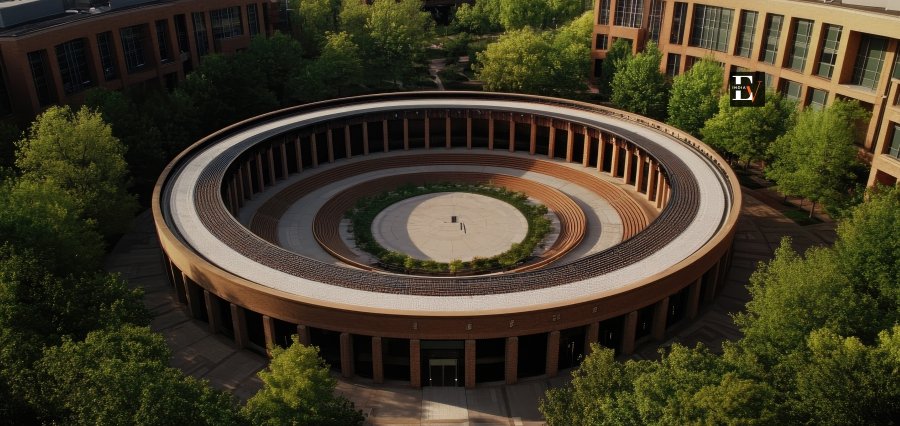
Indian universities are emerging and setting an example of sustainable university leadership by 2026. Emphasising academic excellence. An increasing number of Indian universities are advancing their campuses and surrounding communities through educational opportunities, programs, and initiatives focused on sustainability and social good.
Environmental issues and high-quality education are both extremely prominent in today’s world. Events happen every day that highlight both of these issues.
Higher education’s ability to make a positive difference in both of these areas is about changing the entire focus of how universities think about themselves, their roles in making the world better for our planet and for society at large.
New Face of Academic Leadership
The university administrators across the country have adopted sustainable university leadership 2026 to guide their work. By establishing a brand-new role for university leaders, they are creating living laboratories to implement, trial and refine the principles of sustainable development in their institutions.
University leaders are demonstrating that environmental accountability can coexist with academic achievement by developing projects such as solar-powered campuses and zero-waste cafeterias.
As of 2026, many of India’s most progressive universities are noted for their commitment to sustainable leadership. They are acknowledging the importance of sustaining the environment in which students will be prepared, both through their education and through the development of a more environmentally responsible mindset, to confront the challenges of tomorrow.
Transforming Campus Infrastructure
Indian universities are reinforcing their commitment to the emerging framework on sustainable university leadership 2026. They have invested heavily in renewable energy, rainwater collection, and eco-friendly building design. These upgrades will accomplish two things: First, they will help reduce the total environmental impact of the institution and second, they will provide students with hands-on learning opportunities in sustainability
A great example includes IIT Bombay, where they’ve accomplished substantial milestones towards achieving carbon neutrality. Many of the universities in Kerala have likewise established model organic farms on their campus.
As students witness how solar panels are powering their laboratories or how greywater systems are watering the flowers on campus, the concept of sustainability will be transformed from an academic concept to a real-world exam
Curriculum Innovation and Research Focus
Beyond the infrastructure of universities, sustainability leadership 2026 must encompass the university academics as well. For example, engineering students are learning about green technology, business students are focused on studying the circular economy, and arts students are examining how to tell environmental stories.
In addition, there has been an increase in university research centres focusing on climate change, renewable energy and sustainable agriculture across Indian universities.
These institutions are conducting leading-edge research on issues such as developing drought-resistant crops, creating low-cost solar technologies, and innovatively developing biodegradable packaging materials, all aimed at finding solutions designed specifically for Indian conditions and issues.
Challenges and the Path Forward
Creating a consistently sustainable university by 2026 presents many challenges. There are budget constraints and resistance to change, which require tremendous dedication from leaders.
Most universities are currently trying to strike a balance between meeting their short-term operational needs and their long-term sustainability investments.
The real difference lies in leadership that sees sustainability not as a cost, but as a strategic investment in the university’s future and its students. There are many new funding models for universities, which consist mainly of public-private partnerships, government grants that promote green practices and initiatives, and donations from alumni.
Setting Global Standards
Sustainable university leadership 2026 India is now receiving international recognition. Indian Universities are participating in the international sustainability rankings, showcasing their best practices in international forums, and collaborating with institutions from across the globe. India’s international connectivity provides the foundation for India to emerge as a leader in sustainability for education.
The progressive development of sustainable university leadership 2026 has also enhanced the ability of India to attract international students and faculty who appreciate environmentally sustainable practices. In doing so, these sustainable practices provide an opportunity to develop a culture of talent attraction, which results in increased innovation and impact through collaboration.
Shaping a Sustainable Future Through Higher Education
Entering 2026, the potential of universities to be a transformational aspect for the environment is becoming increasingly evident in India. Universities have taken on the sustainable university leadership 2026 principles, enabling the growth of a new generation of graduates that recognize success in the workplace is interconnected to the health of our planet.
The model of leadership understands that higher learning institutions must provide more than the production of knowledge, but also practice a sustainable future, as well as teach it.
In India, higher education institutions are utilizing their vision and a positive commitment to action as the foundation to build a better future for students. The current transformation occurring at Indian universities today will reach beyond this point in time and throughout many future generations, by instilling change in the minds of individuals, to the minds of societies, and ultimately, to the shared destiny of our environment.