Education plays an important role in shaping future leaders, innovators and responsible citizens. With the universities requirements changing with the demand of the new technology, strong academic leadership becomes essential for long-term growth and relevance.
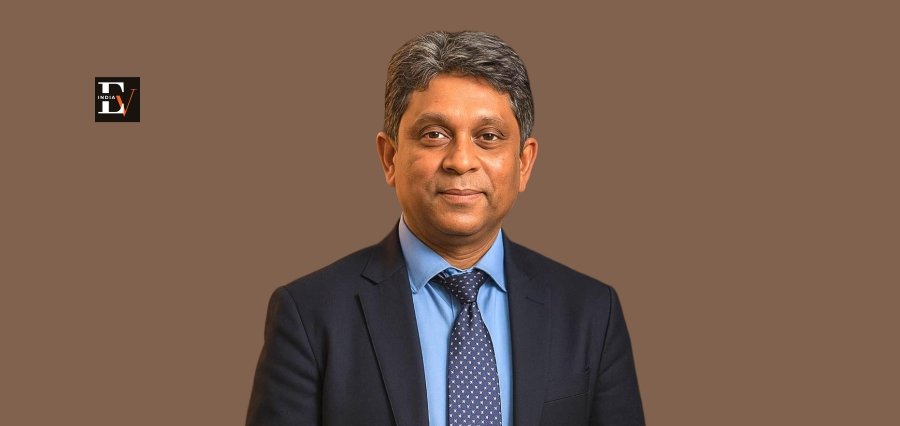
Dr. Vaibhav A. Meshram, Vice Chancellor of Joy University, has built his career around teaching, research and institution building. With experience across academics and industry, he works toward stronger academic standards, encouraging new thinking, and place where students can build the knowledge and skills that prepare them for the real world.
Building Institutions Through Vision, Empowerment, and Inclusivity
Dr. Vaibhav professional journey has been deeply rooted in academics, research, institution building, and educational leadership. Beginning his career with a strong passion for teaching and innovation, he has had the privilege of serving in various academic and administrative roles across reputed institutions. Over the years, he worked extensively in areas such as engineering education, academic planning, research development, faculty mentoring, accreditation, and institutional transformation.
He completed his B.Tech from NIT Kurukshetra, M.Tech from Indian Institute of Technology Bombay and later pursued his PhD from BITS Pilani, which strengthened his academic foundation and research orientation. His professional journey across industry and institutions, including Bharat Electronics Ltd., Philips Semiconductors, HP, Zilog India, Mindtree Consulting, Jain University, Dayananda Sagar University, Yenepoya University and Joy University gave him valuable exposure to higher education governance, institutional development, and strategic leadership.
What inspired him to take on the role of Vice Chancellor was the opportunity to create a larger impact not only on students, but on the entire educational ecosystem. He strongly believes that “universities are not merely degree-granting institutions they are centres for nation-building, innovation, social transformation, and human development.” The role of a Vice Chancellor allows one to shape vision, inspire people, and build institutions that can influence generations.
A Leadership Philosophy Built on Empowerment and Transformation
Dr. Vaibhav describes his leadership philosophy as centred around vision, empowerment, inclusivity, innovation, and continuous transformation. He believes leadership in higher education is not about authority alone it is about creating an ecosystem where faculty, students, researchers, and administrators collectively work toward excellence.
He strongly believes in participative and transformational leadership. Institutions grow when people feel valued, trusted, and inspired. Therefore, he focuses on building a culture of collaboration, transparency, accountability, and academic freedom. At the same time, he encourages innovation, interdisciplinary thinking, and adaptability to emerging global trends.
This philosophy has helped foster a culture where experimentation, creativity, and outcome-oriented learning are encouraged. He and his institution are working toward creating an environment that is student-centric, research-driven, industry-connected, and socially responsible. For him, “institutional growth is sustainable only when it is supported by a strong academic culture and a shared sense of purpose.”
Staying Relevant in a Changing Education Landscape
The education landscape today is undergoing unprecedented transformation due to Artificial Intelligence, digital technologies, globalisation, and changing workforce expectations. Dr. Vaibhav believes that to remain relevant, institutions must move from reactive systems to proactive and future-ready ecosystems.
At his institution, curriculum frameworks, teaching methodologies, and academic strategies are continuously reviewed to align with emerging technologies and industry requirements. The academic ecosystem actively integrates AI, data-driven learning, digital platforms, interdisciplinary education, skill-based learning, and experiential pedagogy.
He also emphasises industry collaboration, innovation centres, incubation initiatives, faculty development, research ecosystems, and global partnerships. His focus is not only to prepare students for current jobs but to equip them with adaptability, critical thinking, creativity, and lifelong learning abilities.
Strengthening Academic Excellence and Student Outcomes
Academic excellence, according to Dr. Vaibhav, is achieved when institutions create a balance between knowledge, skills, values, innovation, and student engagement. Under his leadership, several strategic initiatives have been implemented to strengthen student outcomes and academic quality.
These include outcome-based education, industry-integrated curriculum, project-based learning, experiential learning models, mentorship systems, skill enhancement programs, certification pathways, internships, research opportunities, and continuous assessment mechanisms.
His institution is also focusing extensively on student support systems, including career guidance, entrepreneurship development, soft skill training, innovation labs, and technology-enabled learning environments. Faculty development programs and academic audits further help ensure teaching quality and continuous improvement.
His approach remains holistic, as he does not measure success only through examinations, but through employability, innovation, research contributions, entrepreneurship, ethical values, and societal impact.
Driving Innovation and Research Culture
Dr. Vaibhav strongly believes that “innovation and research flourish when institutions create an environment that encourages curiosity, experimentation, and interdisciplinary collaboration.” His institution actively promotes research culture through funded projects, publications, innovation cells, incubation centers, startup initiatives, and industry-supported research activities.
Faculty and students are encouraged to work on real-world problems through collaborative projects, hackathons, innovation challenges, and industry partnerships. Interdisciplinary collaboration is also a major focus because future solutions will emerge at the intersection of multiple disciplines.
For him, innovation cannot be imposed administratively. It must become part of institutional culture. Therefore, the focus remains on creating an ecosystem where ideas are respected, experimentation is encouraged, and failure is viewed as part of the learning process.
Recognitions That Hold Meaning Beyond Individual Achievement
Throughout his professional journey, Dr. Vaibhav has received several recognitions and reached milestones that have been deeply meaningful, especially those connected with institution building, academic transformation, and student success. One of the most fulfilling aspects has been contributing to the growth and development of institutions and mentoring research scholars who have successfully completed their doctoral work.
He also considers it meaningful to contribute toward strengthening research ecosystems, accreditation standards, innovation-driven learning, and industry-academia collaboration. For him, institutional achievements, improved rankings, research contributions, and the success stories of students and faculty are always more satisfying than individual recognition.
The greatest recognition, he believes, is seeing students transform into confident professionals, innovators, researchers, and responsible citizens contributing positively to society.
Challenges That Define Higher Education Leadership
Dr. Vaibhav believes leadership in higher education today comes with multiple challenges. These include rapid technological disruption, changing student expectations, regulatory complexities, faculty development, financial sustainability, and the increasing demand for employability-focused education.
One of the major challenges he identifies is managing transformation while balancing traditional academic structures with emerging educational models.
To navigate these challenges, he emphasises communication, collaboration, strategic planning, and trust-building. He believes institutional transformation should be developed through collective participation and shared vision rather than imposed abruptly.
Adaptability also remains a central leadership quality in today’s educational landscape. According to him, institutions that fail to evolve quickly risk becoming irrelevant. Therefore, leadership today demands both stability and agility.
Balancing Administration with Vision
For Dr. Vaibhav, administrative responsibilities are essential for institutional functioning, but leadership must always remain vision-driven. His approach focuses on creating strong systems, delegating responsibilities effectively, and empowering capable teams so that operational efficiency can coexist with strategic innovation.
He also prioritises staying academically connected by interacting with students, faculty, researchers, and industry leaders regularly. This ensures decision-making remains aligned with educational realities and future aspirations.
Advice for Aspiring Academic Leaders
Dr. Vaibhav views academic leadership as a journey of continuous learning, responsibility, and service. His advice to aspiring leaders is to first build strong academic credibility, integrity, and professional competence. “Leadership positions should be viewed not as authority, but as opportunities to create impact.”
He believes future academic leaders must remain adaptable, technologically aware, globally connected, and socially responsible. They should cultivate listening skills, emotional intelligence, strategic thinking, and the ability to inspire teams.
Most importantly, he emphasizes that leadership in education must always remain student-centric. Institutions exist not for systems alone, but for shaping human potential and societal progress.
A Vision for the Future of Education in India
Looking ahead, Dr. Vaibhav’s vision is to help build an institution that becomes a centre of academic excellence, innovation, research, entrepreneurship, and social transformation. He envisions creating a future-ready university ecosystem that integrates Artificial Intelligence, interdisciplinary learning, global collaboration, research culture, and industry engagement while preserving human values and ethical education.
For the future of education in India, he believes the country has immense potential to emerge as a global knowledge and innovation hub. India’s demographic advantage, technological growth, startup ecosystem, and educational reforms provide a historic opportunity to redefine higher education.
However, he believes the future will require institutions to move beyond traditional teaching models toward competency-based, research-driven, technology-enabled, and student-centric education systems. Universities must become centres for innovation, employability, sustainability, and nation-building.
Ultimately, his goal is not only producing graduates, but developing responsible global citizens, ethical leaders, innovators, and lifelong learners capable of contributing meaningfully to society and humanity.